The Sea Asks a Great Deal. We're Here to Talk About What It Costs
Real Stories from the Merchant Navy.
Shipping moves 90% of the world’s goods, but the people who move it are largely invisible. The Sarcastic Mariner exists to change that. Through fiction, incident analysis, and honest reflection, we explore the moments when shipping goes wrong—and the human cost that no official report can capture.
This isn’t about blame. It’s about understanding the gap between the procedure and the reality, between the dashboard and the deck, between a safe routine and a catastrophic second. It’s a space for seafarers, shore staff, and anyone curious about the human element of global trade to find stories that feel true.
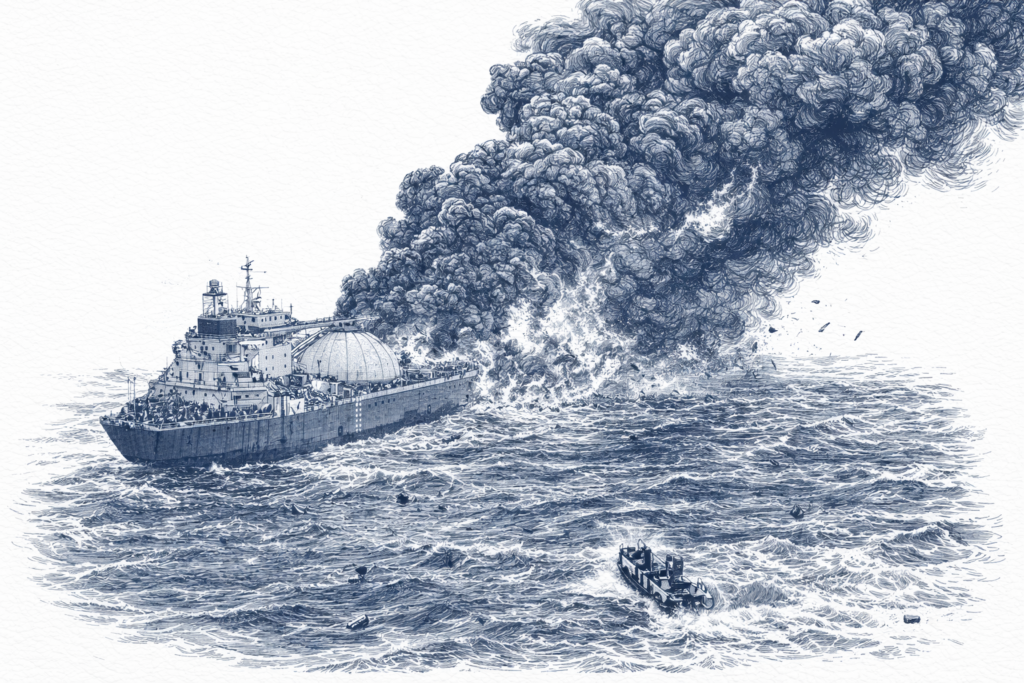
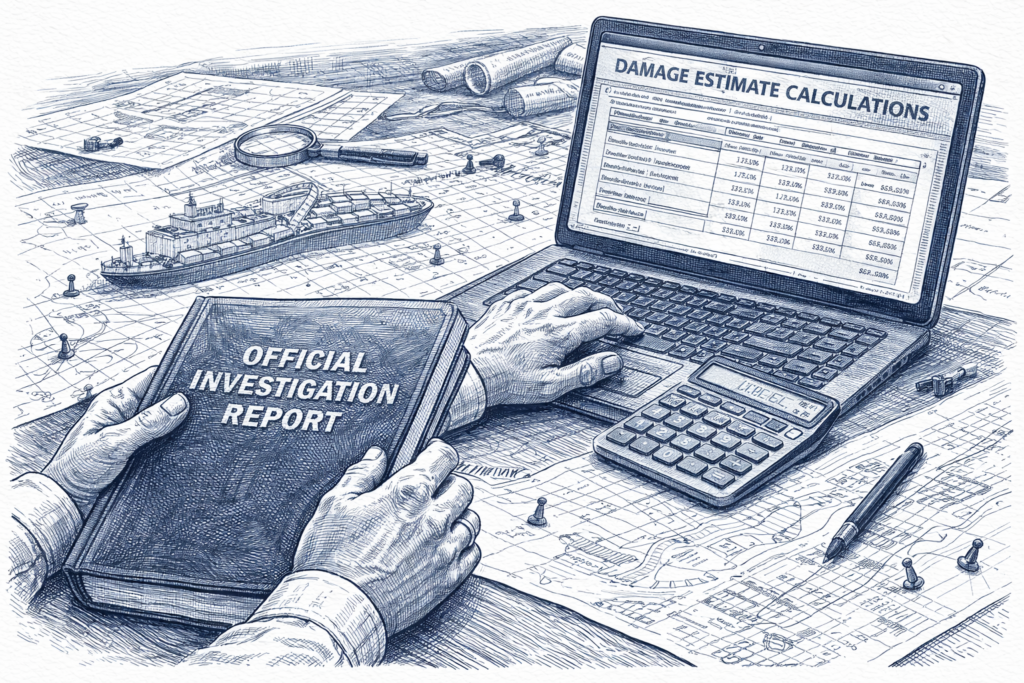
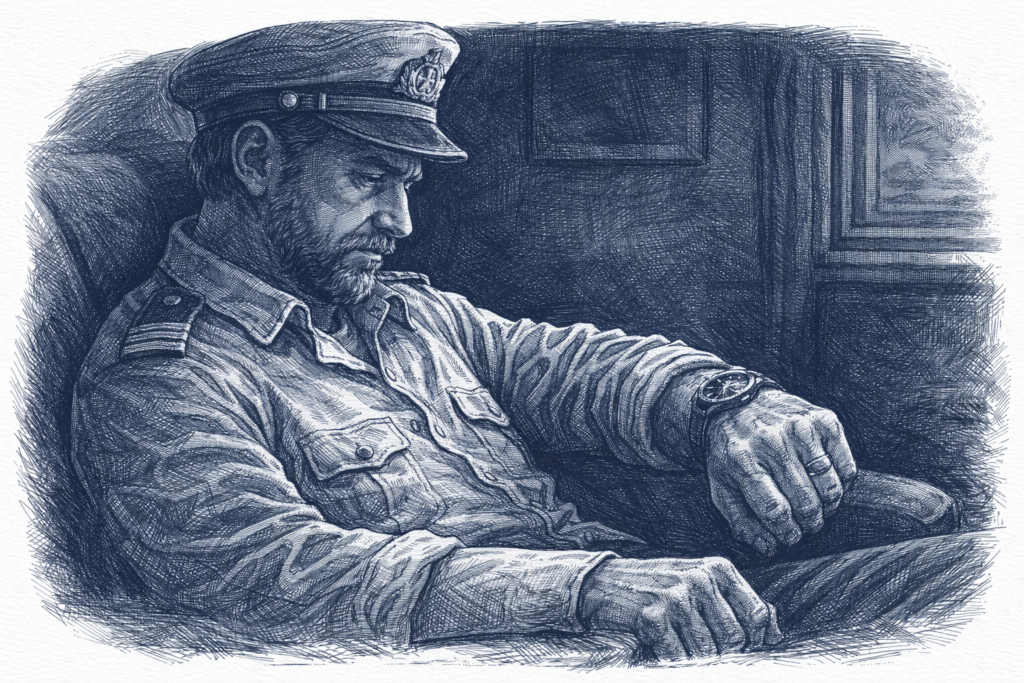
When something goes wrong at sea—a fire, an explosion, a grounding, a collision, a piracy attack—the world sees a headline. The industry files a report. Lawyers assign blame. Insurers calculate the cost.
But the people inside the incident carry it forever.
The official record tells you what happened. It does not tell you what it cost. It does not tell you about the Second Officer who still flinches at loud noises, three years after the explosion. It does not tell you about the Chief Officer who replays thirty seconds in his mind every night, wondering if he could have done something different. It does not tell you about the family waiting for a phone call that never comes.
That gap—between the official record and the human reality—is where we work.
What we do
Through fiction, incident analysis, and honest reflection, we explore the moments when shipping goes wrong. Not as case studies. Not as statistics. As human stories.
Our **The Measurable Horizon** series follows the people inside modern shipping—the Captain alone on the bridge at 03:00, the Chief Engineer who knows the engine better than the digital twin does, the shore superintendents managing four vessels from desks on the fourteenth floor. It is about the pressure that builds before the disaster, the quiet tension that never makes the news.
Our **The Last Watch ** series – grilling now — will dissect what happens when it all goes wrong. Each book takes a single type of maritime casualty—enclosed space, drydock fall, tanker explosion, grounding, collision, engine room fire, mis-declared cargo, piracy, tank rupture—and follows the people on the ship and ashore, in the moments before, during, and long after the official report is filed.
Our **Life Lessons** section will features guest bloggers—seafarers, shore staff, industry veterans—sharing the moments that shaped them. Personal, honest, unvarnished.
**What We're Not**
We are not a training manual. We are not a loss prevention bulletin. We are not anti-technology, anti-management, or anti-progress.
We are anti-delusion.
The delusion that compliance equals safety. The delusion that what gets measured is what matters. The delusion that a procedure written in an office far from the sea can account for the reality of a pump room at 03:00 or a cargo tank filling faster than its vents can handle.
We write about the gap between what the system expects and what actually happens. Because that gap is where people get hurt. That gap is where they die.
Why "Sarcastic"?
You might wonder about the name.
It’s not cynicism. It’s not disrespect. It’s the particular voice of people who have been at sea long enough to know that the most dangerous word in the industry is “routine.” It’s the understatement of a Chief Engineer who has just survived an explosion saying, “That was not ideal.” It’s the quiet observation of a Master watching a dashboard flag something that isn’t broken, while the thing that is broken has no sensor at all.
We write in that voice because it is the voice of the people we write about. It felt wrong to use any other.
Who This Is For
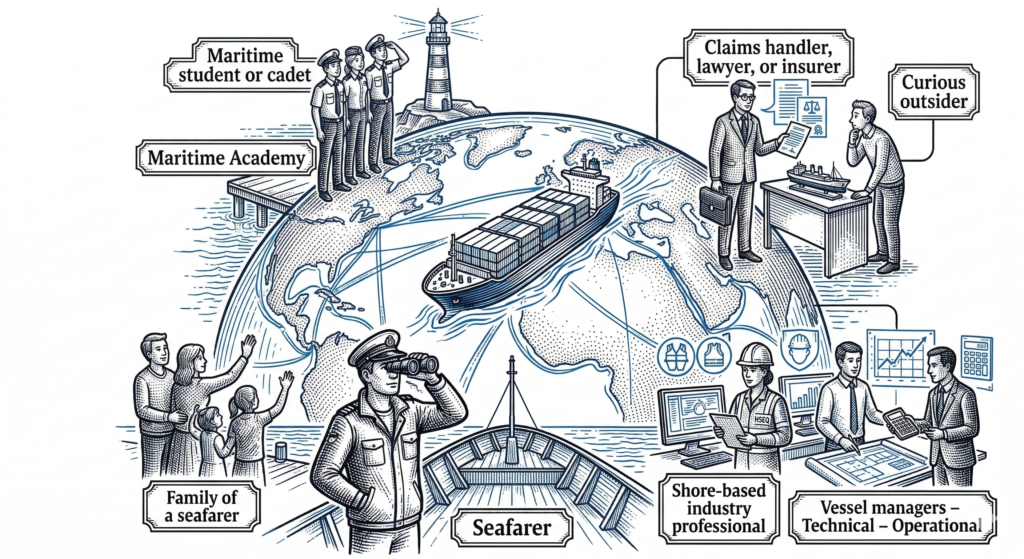
What We Believe
We believe that the people who move the world’s goods deserve to be seen.
We believe that the cost of maritime incidents is measured not just in dollars, but in careers ended, families broken, trauma carried for decades.
We believe that the industry learns slowly, but it learns—and that the learning happens not through reports, but through stories.
We believe that the sea asks a great deal. The least we can do is think very carefully about what we ask of the people who answer.
A Note on Tone
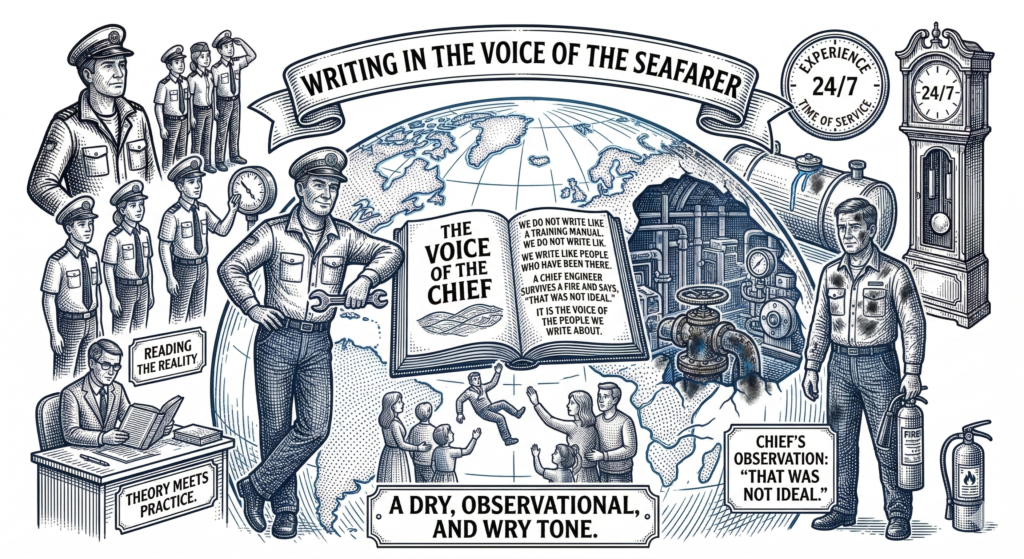
You will notice that we do not write like a training manual. We do not write like a safety bulletin. We write like people who have been there—because we have.
The tone is dry, observational, and occasionally wry. Not because the subject matter is not serious—it is deadly serious—but because the people who do this job tend to express themselves with understatement. A Chief Engineer who has just survived a fire does not say “I was terrified.” He says, “That was not ideal.”
We write in that voice. It is the voice of the people we write about. It felt wrong to use any other.
The Moment That Started This
It was 03:00 on a tanker in the South China Sea. The author who would become “The Sarcastic Mariner” was a junior officer, standing watch, watching the radar sweep an empty ocean. Somewhere behind him, in a cabin, the Chief Engineer was asleep. Somewhere ahead, a port was waiting. Somewhere at home, a family was going about their day, unaware that their son, their husband, their father was out here, alone, carrying the weight of a vessel and its crew and seventeen million dollars’ worth of cargo.
He thought: *No one knows we’re here. No one knows what this costs.*
That thought never left.
Decades later, after sea and shore, after investigations and claims and the endless paperwork of maritime casualties, it became this website. These books. These stories.
What We Carry
Everyone who works at sea carries something. A close call they never reported. A decision they still question. A face they can’t forget.
Everyone who works ashore carries something too. The call at 02:00. The family waiting for news. The file that never quite closes.
We started writing because we noticed that the official record—the incident reports, the investigation findings, the loss prevention circulars—captured the “what” but never the “what it cost.” They told you which valve failed. They did not tell you about the engineer who had inspected that valve a hundred times and would now replay that moment for the rest of his life.
We write to capture the cost.
The Gap
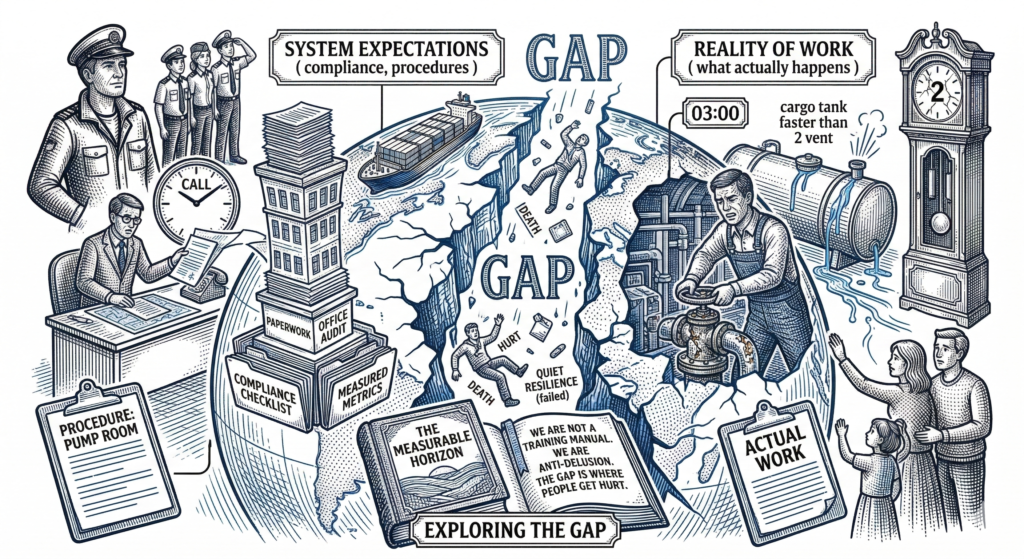
There is a gap in this industry. It is not a gap in regulation. It is not a gap in technology. It is a gap in understanding—between the people who make the rules and the people who live by them, between the dashboard and the deck, between the procedure written in an office and the reality of a tanker at 03:00 in a building sea.
We write about that gap. We write about the people who fall into it. We write about the people who catch them. We write about the people who carry them afterward.
Because the gap is real. And until we acknowledge it, we cannot close it.
The Invitation
You don’t have to be a mariner to read these books, blogs…. You just have to be interested in people—in what happens when competent individuals, following correct procedures, find themselves in the space between what they knew and what they needed to know.
If that sounds like your kind of story, welcome.
You’re in the right place.
Still Unsure?
Email us at info@thesarcasticmariner.com
Seriously. We reply.