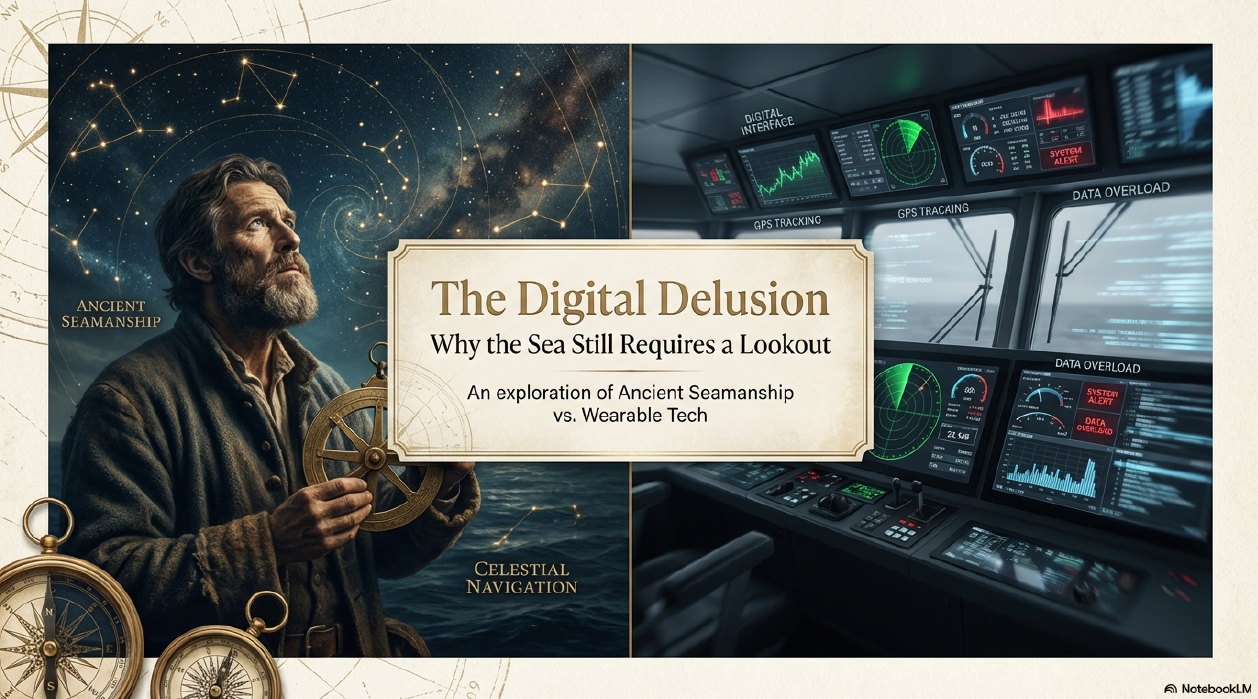

Ancient Seamanship vs. Wearable Tech – Why the Sea Still Requires a Lookout
Before dashboards, before satellites, before someone decided every problem could be solved with a sensor and a subscription plan—there was observation.
The North Star guided the Phoenicians.
Arab sailors smelled the wind before it shifted.
Greek navigators read the colour of water like a language.
Polynesians could feel land beyond the horizon through the rhythm of swells.
No alerts.
No pop-ups.
No “System Error – Please Contact IT.”
And yet… they crossed oceans.
Fast forward to today: Welcome to the Age of Digital Confidence
We’ve built ships that:
- measure everything
- record everything
- transmit everything
- and somehow… explain nothing clearly at 03:00 AM
Because here’s the uncomfortable truth:
We’ve never had more data… or less clarity.
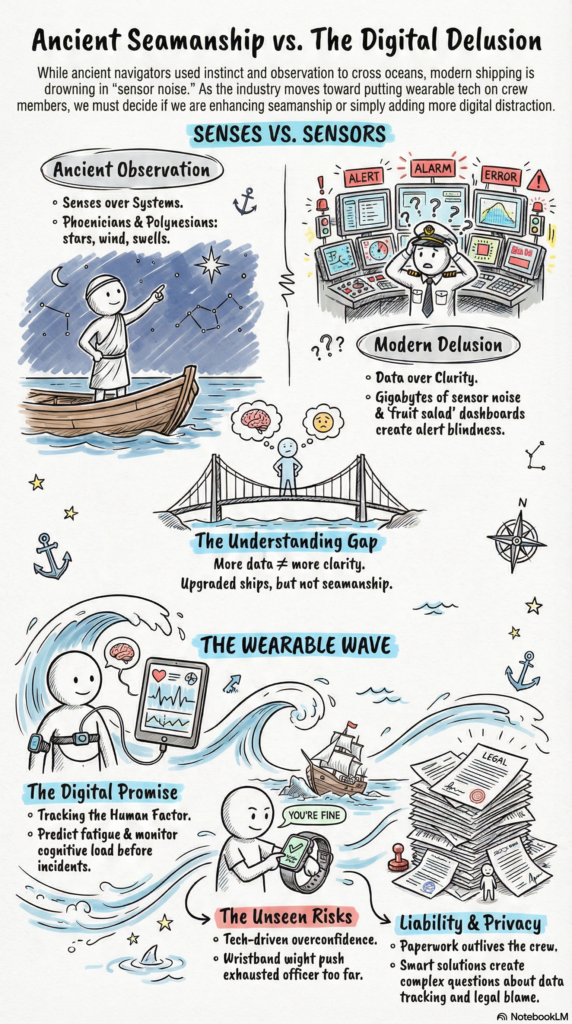
Ancient Navigators vs. Modern Operators
Ancient mariners had less information—but more understanding.
They didn’t have:
- vibration analytics
- shaft power curves
- predictive maintenance dashboards
- or “AI-enhanced voyage optimisation engines”
But they did have context.
Today, a vessel produces:
- gigabytes of sensor noise
- alarms that trigger like overexcited interns
- dashboards that look like a fruit salad designed by engineers
- and insights that require a second dashboard to interpret the first
The ancient navigator would stare at our bridge and politely ask:
“Very impressive. But what is the ship actually doing?”
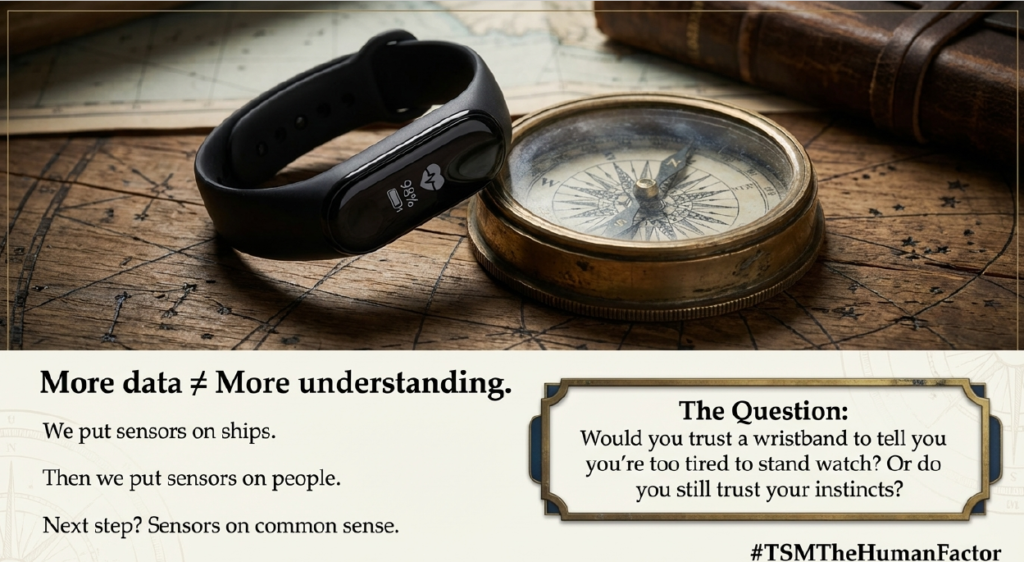
The Real Problem: We Upgraded the Ship, Not the Seamanship
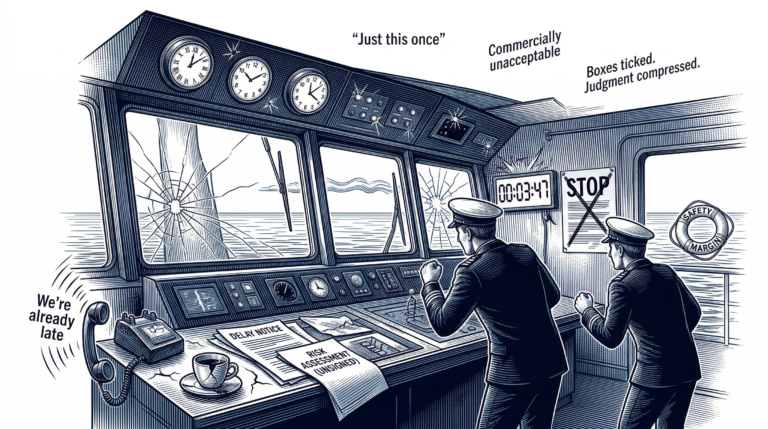
Somewhere along the way, we replaced interpretation with observation-by-proxy.
Now we trust:
- numbers over nuance
- alerts over awareness
- systems over senses
The result?
- Data fatigue
- Alert blindness
- Conflicting reports
- And the industry’s favourite solution:
“Let’s add another sensor.”
It’s the maritime equivalent of using binoculars to fix fog.
Enter Wearable Tech: Because Apparently the Bridge Wasn’t Crowded Enough
Now we’re putting sensors on the crew.
Smart wristbands.
Biometric patches.
Devices that know you’re tired before you do.
Sounds futuristic.
Also sounds like the beginning of a very awkward conversation with HR.
What Wearables Could Do (If Done Right)
- Fatigue monitoring: Predict exhaustion before it becomes a headline
- Health tracking: Early detection of illness or stress
- Cognitive load insights: When your brain quietly resigns before your body does
“For the first time, we might measure the gap between how tired someone feels… and how tired they actually are.”
That’s powerful.
What Nobody Puts on the Brochure
Because every “smart solution” comes with a slightly less smart consequence:
- Overconfidence:
A wristband says “You’re fine” → Officer pushes harder → Reality disagrees - Privacy concerns:
Crew wonders who’s tracking what—and why - Usability issues:
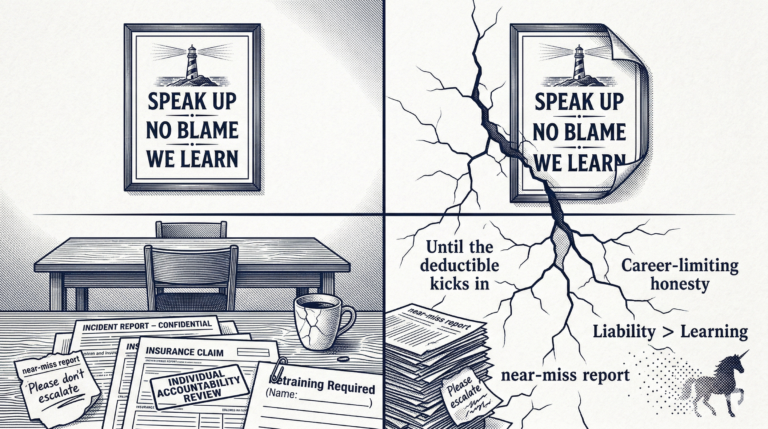
If it’s uncomfortable, intrusive, or dead by noon… it’s not innovation, it’s decoration - Liability chaos:
When something goes wrong, who gets blamed?
The officer? The company? The algorithm?
Spoiler: The paperwork will outlive everyone involved.
This Was Never a Tech Problem
It’s a human factors problem wearing a digital costume.
Industries like aviation learned this early:
Technology works only when it is designed around humans—not deployed onto them.
Shipping is still catching up.
Or learning the hard way.
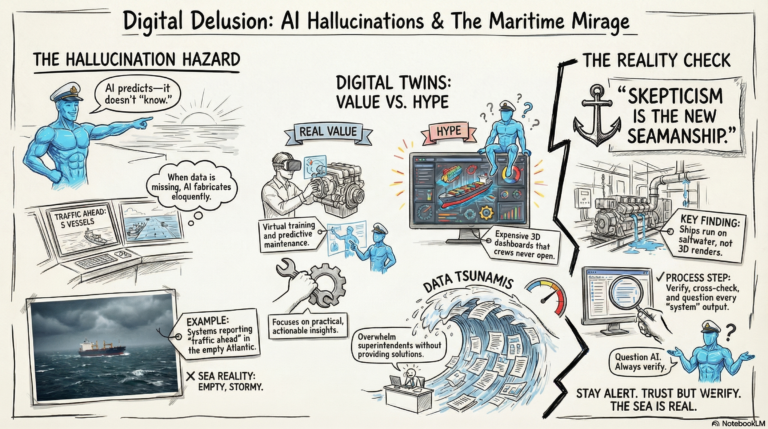
The Old Skill We Quietly Deleted: Verification
Ancient mariners had one discipline we’ve outsourced:
They questioned everything.
- If the sea looked wrong → they checked again
- If the wind shifted unexpectedly → they reassessed
- If something didn’t fit → they trusted judgment over instruments
Today?
We trust the screen.
Even when:
- sensors drift
- systems glitch
- or the software is simply having a personality crisis
Ancient sailors wouldn’t reject our technology.
They’d just refuse to worship it.
Where This Is Going
Wearables are coming.
Regulators will like them.
Insurers will love them.
Operators will trial them.
And somewhere in the middle… seafarers will have to live with them.
Done right:
→ They could save lives
→ Reduce fatigue-related incidents
→ Provide real insight into human performance
Done poorly:
→ Another checkbox
→ Another distraction
→ Another layer between humans and reality
Conclusion: The Sea Doesn’t Care About Your Dashboard
Ships will get smarter.
Systems will get faster.
Data will get bigger.
But the sea?
Still runs on interpretation.
The sea rewards those who understand it—not those who measure it best.
The ancient navigator knew that.
The question is:
Do we still?