
“The Most Dangerous Cargo on Board: How ‘Urgency’ Bends the Rules”
Shipping doesn’t really have emergencies.
The Cultural Disease – It has habits.
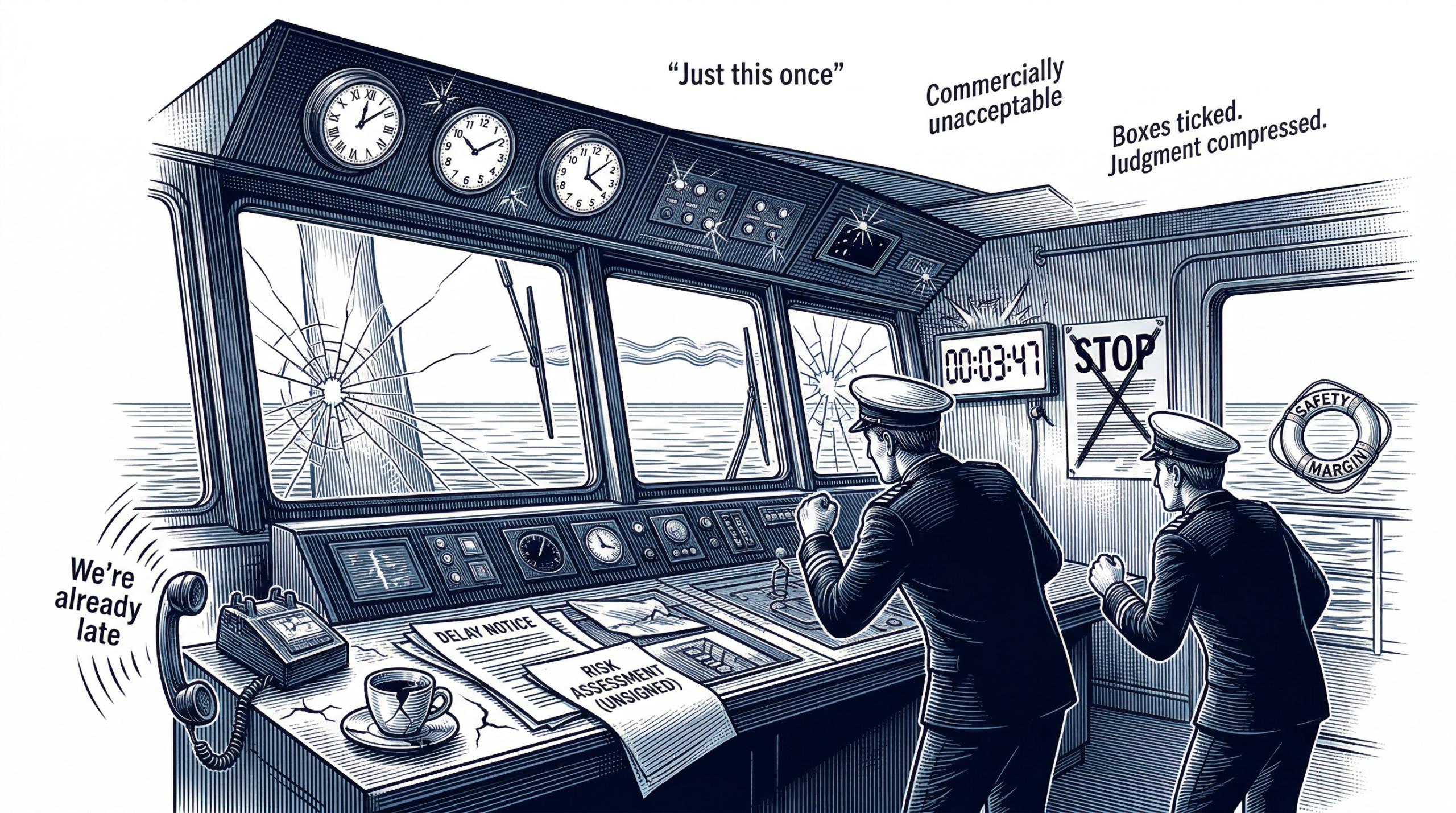
Everything is urgent. Every operation is “time‑critical.” Every delay is “commercially unacceptable.”
And somewhere along the way, in an industry that never stops talking about safety culture, urgency quietly became the most dangerous cargo on board.
No manifest. No placard. No one declared it.
But it’s there. On every vessel. In every office.
And it’s bending the rules.
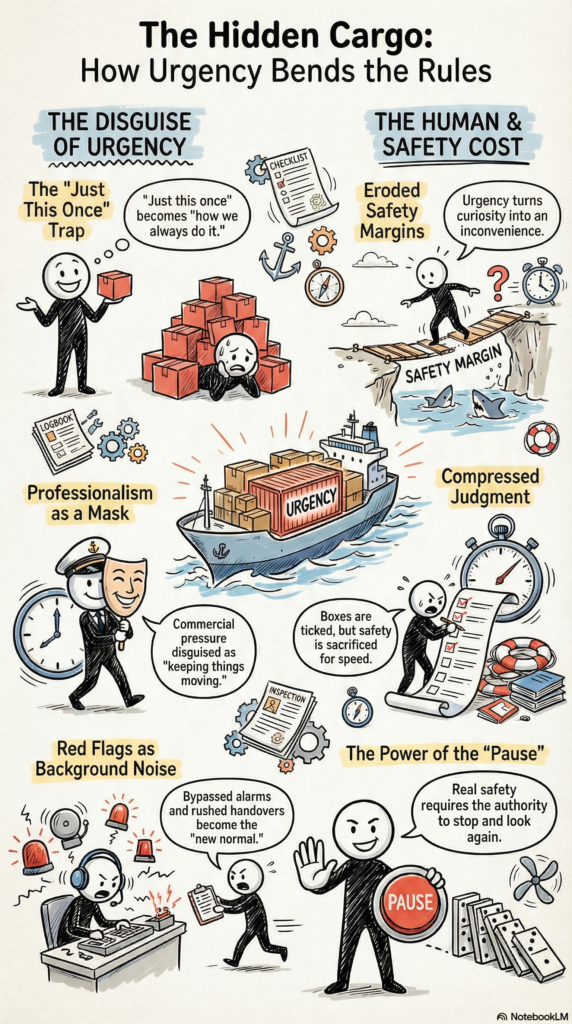
The Tyranny of “Just This Once”
Most incidents don’t start with recklessness.
They start with phrases that sound reasonable:
- “Just finish the bunkering.”
- “We’re already late.”
- “We’ve done this a hundred times.”
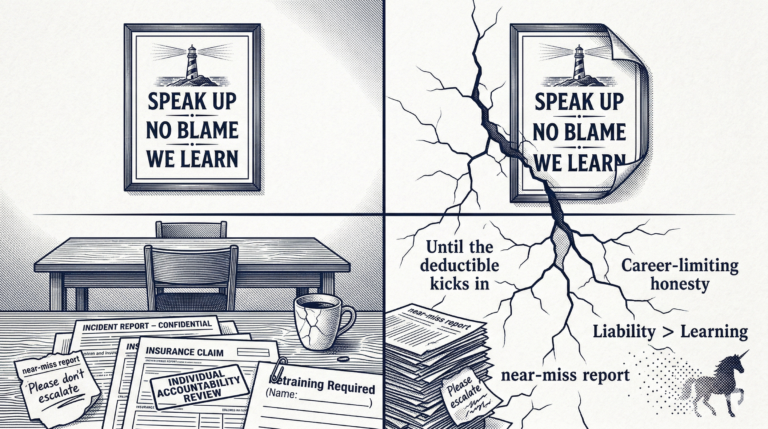
- “Let’s not make a big issue.”
Individually? Harmless.
Collectively? They form a culture where stopping feels more risky than continuing.
Urgency doesn’t shout. It doesn’t wave red flags.
It whispers. And it’s usually persuasive.
When Red Flags Become Background Noise
Shipping is full of alerts. Alarms. Emails. Messages. Dashboards.
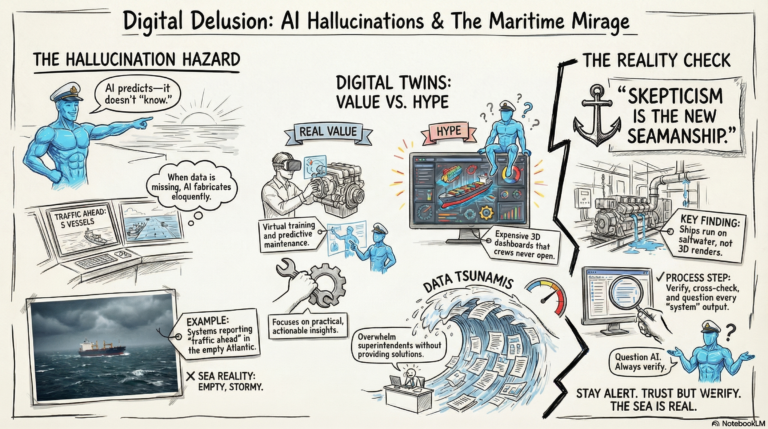
The more information we have, the easier it becomes to ignore discomfort.
- A slow response becomes “normal.”
- A bypassed alarm becomes “temporary.”
- A rushed handover becomes “good enough.”
Nothing feels unsafe in isolation.
But safety rarely collapses in isolation.
It collapses in the gap between “just this once” and “this is how we always do it.”
Commercial Pressure Wears a Friendly Face
Urgency rarely arrives wearing a villain’s cape.
It comes disguised as professionalism:
- “Charterers are watching.”
- “The terminal is tight.”
- “We’ll sort the paperwork later.”
- “Let’s not escalate.”
No one explicitly says, “Let’s take a risk.”
They say, “Let’s keep things moving.”
And shipping, by design, rewards movement.
The Human Cost of Constant Urgency
Living in permanent urgency does something subtle to people.
It shortens conversations.
It reduces curiosity.
It turns questions into inconveniences.
- Crew stop challenging plans.
- Shore teams stop asking “why.”
- Everyone starts optimising for speed instead of margin.
Not profit margin.
Safety margin.
And that’s a trade you don’t feel until it’s gone.
The Quiet Irony
Most post‑incident investigations don’t find a lack of procedures.
They find procedures that were technically followed—under pressure.
Boxes ticked. Forms signed. Judgment compressed.
Urgency doesn’t break rules.
It bends judgment until the rules barely matter.
A Small, Uncomfortable Thought
What if the real risk isn’t the equipment, the weather, or the cargo?
What if the real risk is an industry that has normalised urgency so deeply that stopping feels unprofessional?
Because when everything is urgent, nothing gets the attention it deserves.
And safety, inconveniently, requires time.
Final Thought
Shipping will always be time‑sensitive.
But urgency should be a signal—not a default setting.
The safest operations aren’t the fastest ones.
They’re the ones where someone still feels allowed to say:
“Pause. Let’s look again.”