
Loneliness – Rental Families & Real Blood
There’s something about watching a film at thirty‑thousand feet.
The world below is a grid of lights and silence. You’re in a metal tube, breathing recycled air, watching strangers pretend to be other strangers on a tiny screen.
Strange place for truth to land. But sometimes it does.
We watched a small Japanese film called Rental Family.
Premise: a man hires actors to play the family he never had. Wife, daughter, mother. For a weekend, they perform belonging. Share meals. Ask about his health. Laugh at his jokes.
A transaction. Everyone knows it.
And yet, between the scripted lines and rehearsed affection, something real flickers.
The loneliness that drove him to rent a family is the same loneliness most of us carry – hidden under job titles, WhatsApp ticks, and the heavyweight of “I’m fine.”
We sat there, 30,000 feet up, and thought:
How many of us are renting families without knowing it?
The Quiet Trade
The film asks an uncomfortable question:
What happens when the only way to feel seen is to pay for it?
We live in a world that worships independence.
Stand on your own feet. Don’t burden others. You’ve got this.
So we do. We carry our own boxes, fight our own battles, swallow our own silences.
But humans weren’t designed to be islands.
We were designed for shorelines – places where we meet, where tides bring us together, where we can look at another person and say, without words, I see you.
The man in Rental Family couldn’t say that to anyone. So he bought it.
The tragedy isn’t that he paid for connection. It’s that he had to.
Blood, Bro, and the Family We Choose
We talked to a teenager recently – sharp kid who calls everyone “blood.”
“If you’re blood, you’re family. Doesn’t matter if we’re related. You’re just… blood.”
His closest friends are bro. Sometimes dad bro – an elder who watches your back, calls you out, shows up.
Three friends from primary school. Not related by blood. But they’ve built something tighter than most families.
Group chat that never sleeps. Unspoken rules – iron. If one is in trouble, the others move. No questions.
We asked: What do you call someone who’s not blood, not bro, but still there?
He paused. “Still blood. Just… takes longer to earn it.”
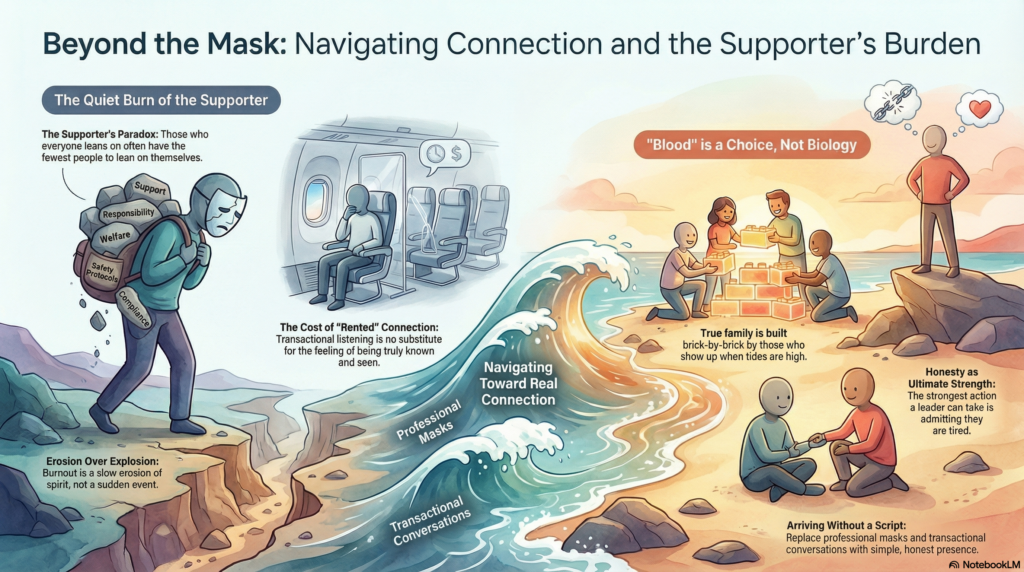
Family isn’t always the one you’re born into. Sometimes it’s the one you build, brick by brick, with people who show up when the tide is high.
Who Supports the Supporter?
But here’s the question that keeps us awake – somewhere between the Eastern Channel and the Cove of Unspoken Things:
Who supports the supporter?
We’ve spent years in industries where care is operational. HSEQ. Risk assessments. Crew welfare forms. Checklists for feelings, it sometimes seems.
Behind the protocols are real people.
The crewing manager who takes the midnight call when a vessel is in distress.
The HSEQ officer who investigates an incident, then goes home to a family that doesn’t understand his silence.
The superintendent who flies to a site, listens to a dozen problems, solves nine, carries the other three home like stones.
They are the supporters. The ones everyone leans on.
The ones who say “I’ve got this” – even when running on fumes.
But who do they lean on?
We’ve seen it too many times – the quiet burnout of the “strong” ones.
Praised for resilience until one day, resilience looks exactly like exhaustion.
We’ll talk about engine failures and supply chains. But ask a man how he’s really doing – really – and the room goes quiet.
The film shows a man who couldn’t ask. So he paid someone to listen.
What does it say about us that we’ve made listening a commodity?
The Shame of Needing
There’s a special shame attached to loneliness – especially for men, especially in industries where strength is measured by what you can carry.
We’ve been taught that needing someone is weakness.
That asking for help is failure.
That the strong stand alone.
But we’ve watched too many stand alone until they can’t.
The strongest thing a man can do is sometimes to admit he’s tired.
To say, “I need someone to talk to.”
To call a friend – not because there’s a crisis, but because there’s a quiet ache that won’t go away on its own.
That teenager gets it. His pact: No one goes through anything alone.
No forms. No policies. Just showing up.
Maybe we need to learn from them.
Rental Families of Our Own
If we’re honest, most of us have rented families.
The colleague who becomes a confidant because you see them more than your spouse.
The WhatsApp group that holds you together.
The old friend you meet once a year but who knows your history better than anyone.
Not blood. But blood – in the way that kid meant it.
People who earn the right to see you without masks.
The man in the film rented a family for a weekend.
But what he really rented was permission – to be seen, to be cared for, to exist without performing strength.
Not a script. Not a transaction. Just someone who says “I’m here” and means it.
Reflections from the Shore
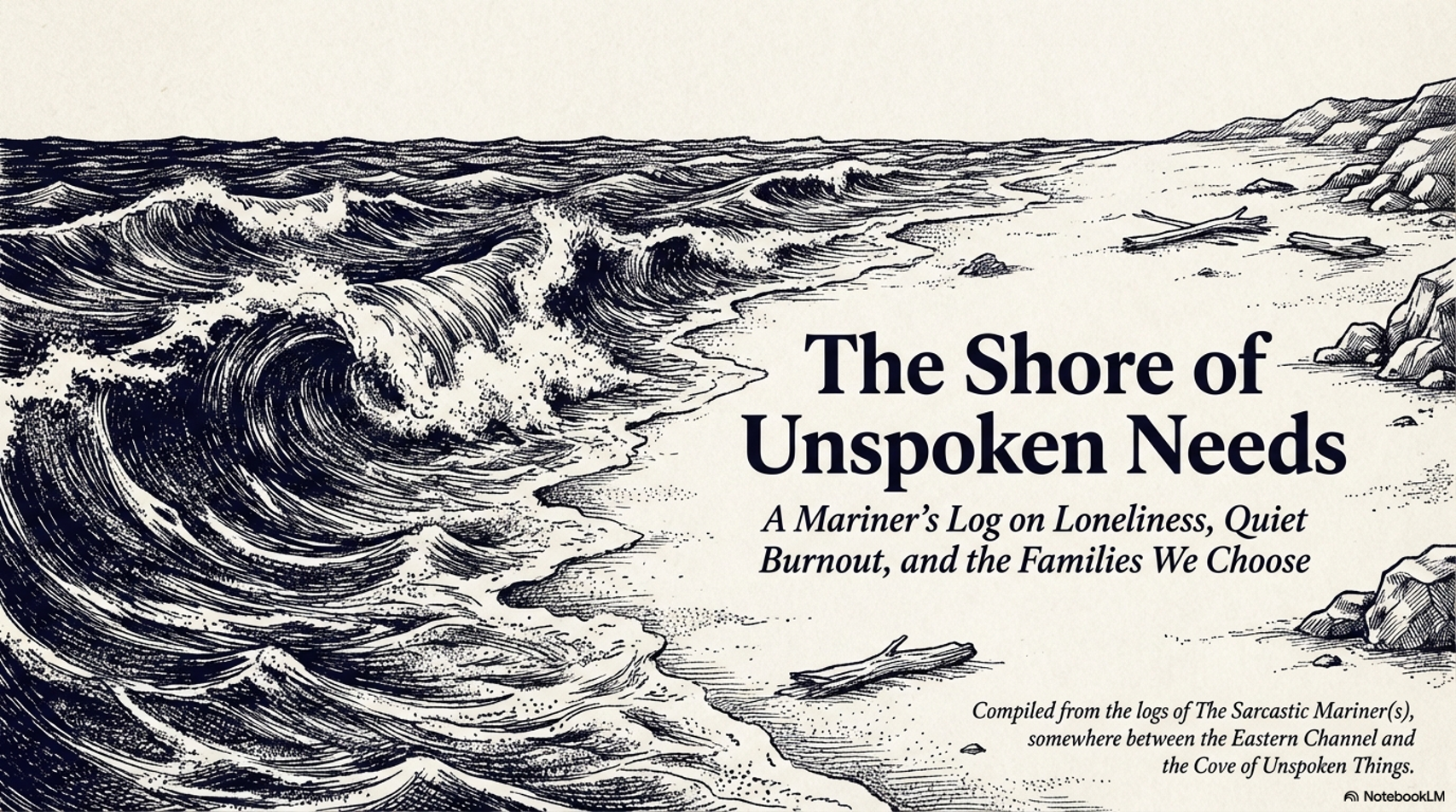
So we sit here, cold water lapping at our ankles.
We think about the film, the teenager, the supporters, and the quiet shame of needing.
The waves keep coming. They don’t ask permission. They don’t apologise.
They just arrive, break, retreat, and arrive again.
Maybe that’s what we need to learn. To arrive for each other.
Without scripts. Without transactions. Just presence.
- If someone reaches out, be there. Not because you have to. Because they chose you.
- If you are the supporter, find your own shore. Someone to lean on, without the weight of roles.
- If you are struggling, say it. The right people won’t judge. They’ll just sit with you until the tide turns.
We live in a world where you can rent a family, but you can’t rent the feeling of being truly known.
That’s built over time. Over late nights. Over shared silences. Over the moments when someone says “I’ve got you” – and you believe them.
Here’s to the families we’re born into, and the ones we build.
Here’s to the supporters, and the people who support them.
Here’s to the teenagers who teach us that blood is not just biology – it’s choice.
And here’s to the shore, where we can finally take off the masks and say:
I’m here. You’re here. That’s enough.
— The Sarcastic Mariner(s)
Somewhere between the In‑Flight Theatre and the Shore of Unspoken Needs
The novel behind this series: I See U →
Related reading: The Quiet Defiance of Staying Afloat