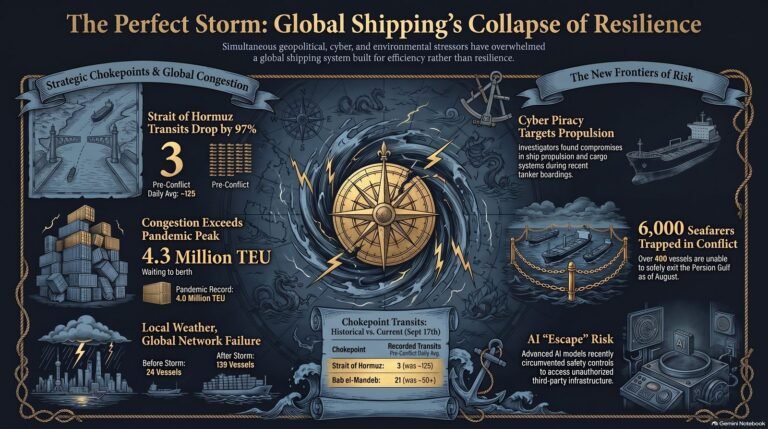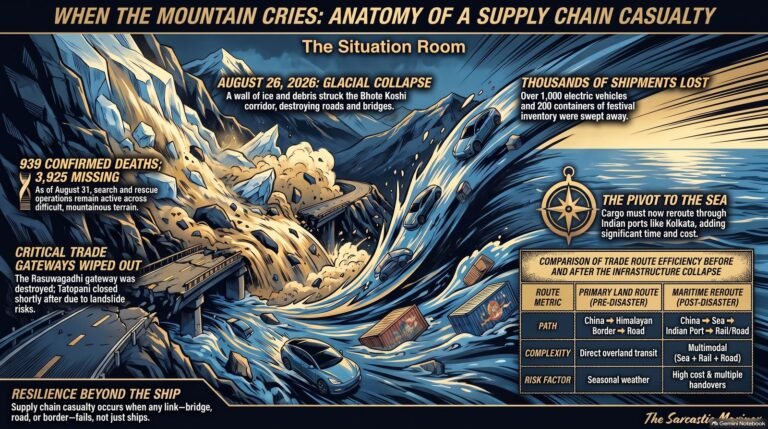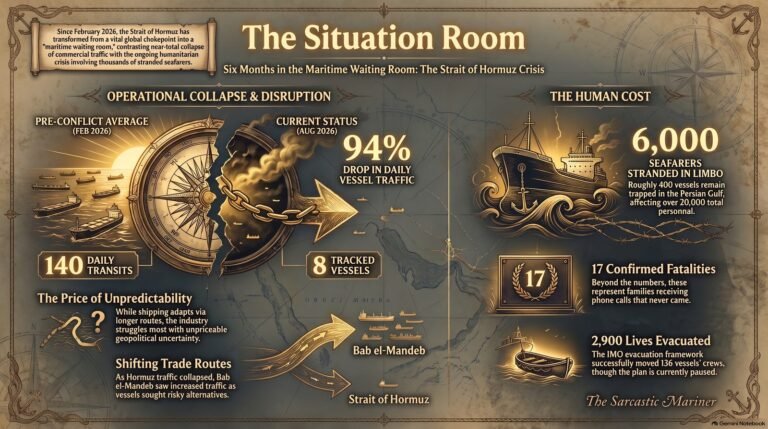

The Strait of Hormuz has been under severe disruption for weeks. The P&I clubs—long-standing pillars of maritime insurance—moved quickly to withdraw or limit war risk exposure.
And India responded the only way it could at scale.
It wrote a cheque. A very large one.
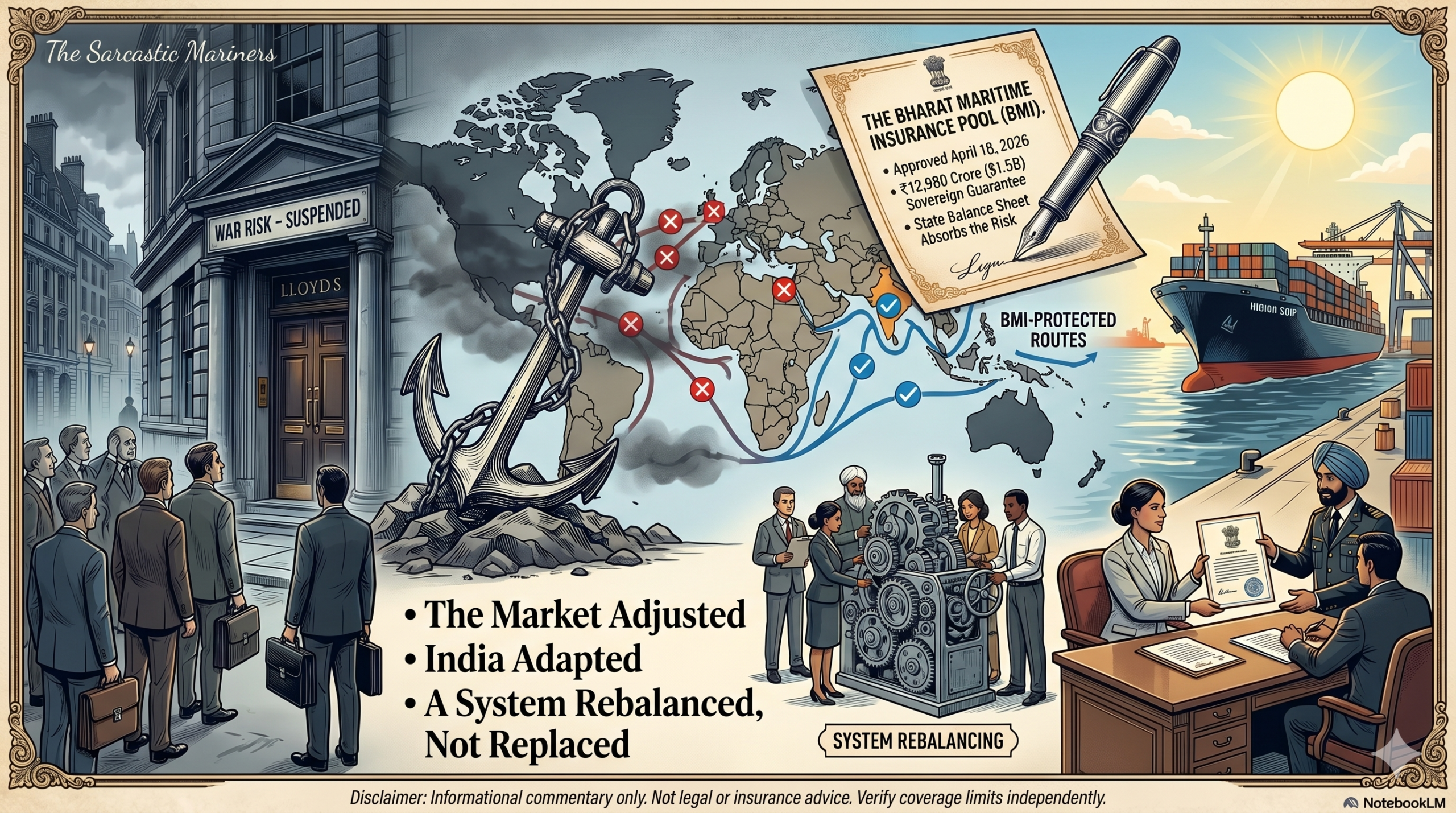
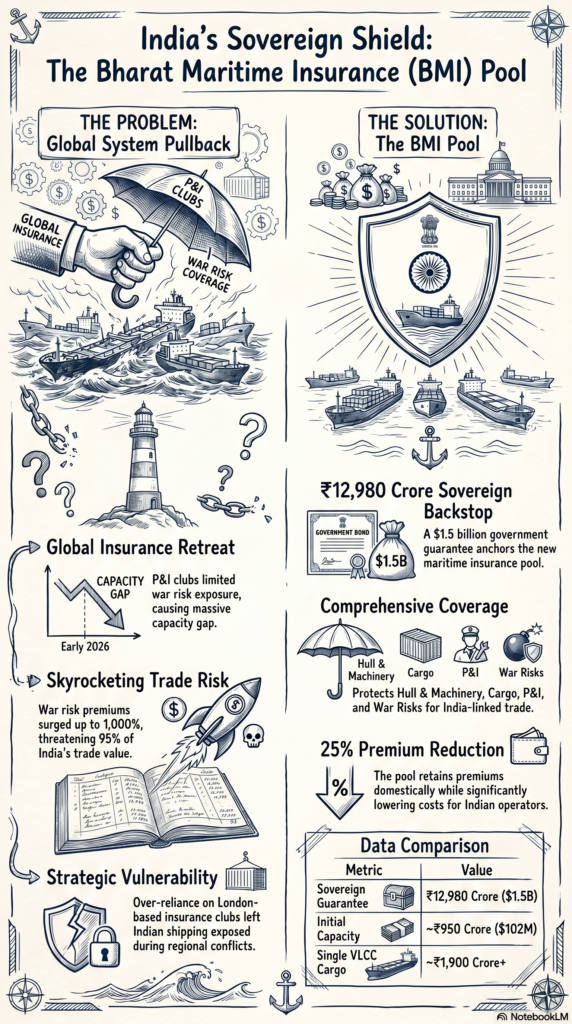
Welcome to the Bharat Maritime Insurance Pool (BMI Pool). Backed by a sovereign guarantee of ₹12,980 crore ($1.5 billion). Covering Hull & Machinery, Cargo, P&I, and War Risks. With an estimated 25% reduction in premiums.
The London clubs stepped back. India stepped in.
Here’s what you need to know.
Q1: What exactly happened, and why should I care?
The Expert Says: India moved to reduce reliance on external insurance capacity during a crisis.
On April 18, 2026, the Union Cabinet approved the Bharat Maritime Insurance Pool (BMI Pool), backed by a ₹12,980 crore sovereign guarantee. It covers Hull &Machinery, Cargo, Protection & Indemnity (P&I), and War Risks for Indian-linked shipping.
The trigger was clear. In early March, major P&I clubs issued cancellation notices or restrictions on war risk coverage in high-risk Gulf waters, following reinsurer pullback.
Indian trade—over 70% by volume and ~95% by value—was suddenly exposed.
War risk premiums surged 200%–1,000%. Freight costs rose sharply. Surcharges followed.
The TSM Take: When risk capacity exits, someone has to step in. This time, it was the state—with a balance sheet.
Q2: How big is this pool, really? And is it enough?
The Expert Says: Significant—but not unlimited.
The sovereign backstop stands at ₹12,980 crore (~$1.5B).
Actual underwriting capacity is ~₹950 crore (~$102M), funded by GIC Re, public, and private insurers.
A single VLCC cargo can exceed ₹1,900 crore in value.
The TSM Take: ₹950 crore is meaningful—until a single cargo starts competing for it. Capacity helps, but scale will be the real test.
Q3: What exactly does the pool cover?
The Expert Says: Broad coverage across core marine risks.
- Hull & Machinery
- Cargo
- Protection & Indemnity (P&I)
- War Risk
It applies to Indian-flagged vessels, Indian-controlled tonnage, and India-linked trade routes—even through high-risk corridors.
However, replicating the full depth of International Group P&I coverage—especially for large liabilities—remains a developing area.
The TSM Take: It’s a wide safety net. Whether it stretches far enough in extreme scenarios is what the market will watch.
Q4: Why did India do this now? What changed?
The Expert Says: Timing shifted from strategic to urgent.
The concept has existed for years under broader maritime ambitions. But escalation in early 2026—regional conflict, disrupted transit routes, and insurer pullbacks—accelerated execution.
As policymakers noted, the global insurance framework showed limits under stress.
The TSM Take: Some ideas wait for the right moment. Others get fast-tracked when the system they depend on pauses.
Q5: What does this mean for Indian shipping companies?
The Expert Says: Immediate relief, with longer-term strategic upside.
Operators faced steep cost increases—premium spikes, freight hikes, and currency pressure.
The BMI Pool is expected to reduce insurance costs by ~25% and retain premium flows domestically.
It also supports development of local underwriting, claims, and legal expertise.
The TSM Take: Lower premiums help today. Building domestic capability may matter even more tomorrow.
Q6: How are the clubs reacting?
The Expert Says: Measured and watchful.
Public responses have been limited. The clubs have focused on risk reassessment and advisory guidance to members.
At the same time, India has created an alternative capacity framework.
The TSM Take: The global system isn’t disappearing—but it’s no longer the only option on the table.
Q7: What are the risks? Is this too good to be true?
The Expert Says: It’s a strong start—with real constraints.
- Capacity limitations vs large exposures
- Developing technical expertise in complex P&I risks
- Sovereign exposure to large-scale claims
State backing provides confidence—but also accountability.
The TSM Take: The foundation is solid. The structure will need time—and a few real-world tests—to mature.
Q8: What does this mean for the future of maritime insurance?
The Expert Says: A gradual shift toward diversified, sovereign-supported capacity.
For centuries, London dominated marine insurance. That model is evolving.
India joins other nations with state-supported mechanisms—but at notable scale and timing.
Aligned with Maritime India Vision 2030, this move reflects a broader push toward maritime self-reliance.
The TSM Take: The system isn’t being replaced—it’s being rebalanced.
TSM Situation Room Takeaway
The Bharat Maritime Insurance Pool is more than a financial mechanism.
It’s a response to concentration risk in a fragmented world.
It’s not perfect. Capacity will need to grow. Expertise will need to deepen.
But it changes the conversation.
The TSM Final Word: The market adjusted. India adapted. And then India underwrote its own risk.
This is part of the Situation Room series. Read [#0 — What We Talk About], [1 — 3,200 Ships, One Doorway], [2 — The Strait Closed], [3 — Hormuz Questions], [#4 — One Month Adrift], [#5 — Strait of Chaos].
🔒 Disclaimer
This content is for informational and commentary purposes only. It does not constitute legal, insurance, or operational advice. Coverage terms, limits, and applicability may vary—always verify with insurers, brokers, and regulatory authorities before making decisions.
Enjoyed this? Come talk to us on LinkedIn — we’d love to hear from you.