
We built Smart Ships. Yet the human factor in maritime safety keeps showing up in the same headlines: Crew lost. Vessel grounded. Cargo fire. Investigation underway.
Shipping has never been more advanced: AI route optimisation. Digital twins predicting maintenance. Real-time tracking that knows where every container is breathing.
And yet — every few weeks — the same story quietky repeats itself, which raises a slightly uncomfortable question.
If shipping is “adapting” so quickly… why are we still fighting the same battles?
The Human Factor in Maritime Safety: The Paradox No One Likes Talking About
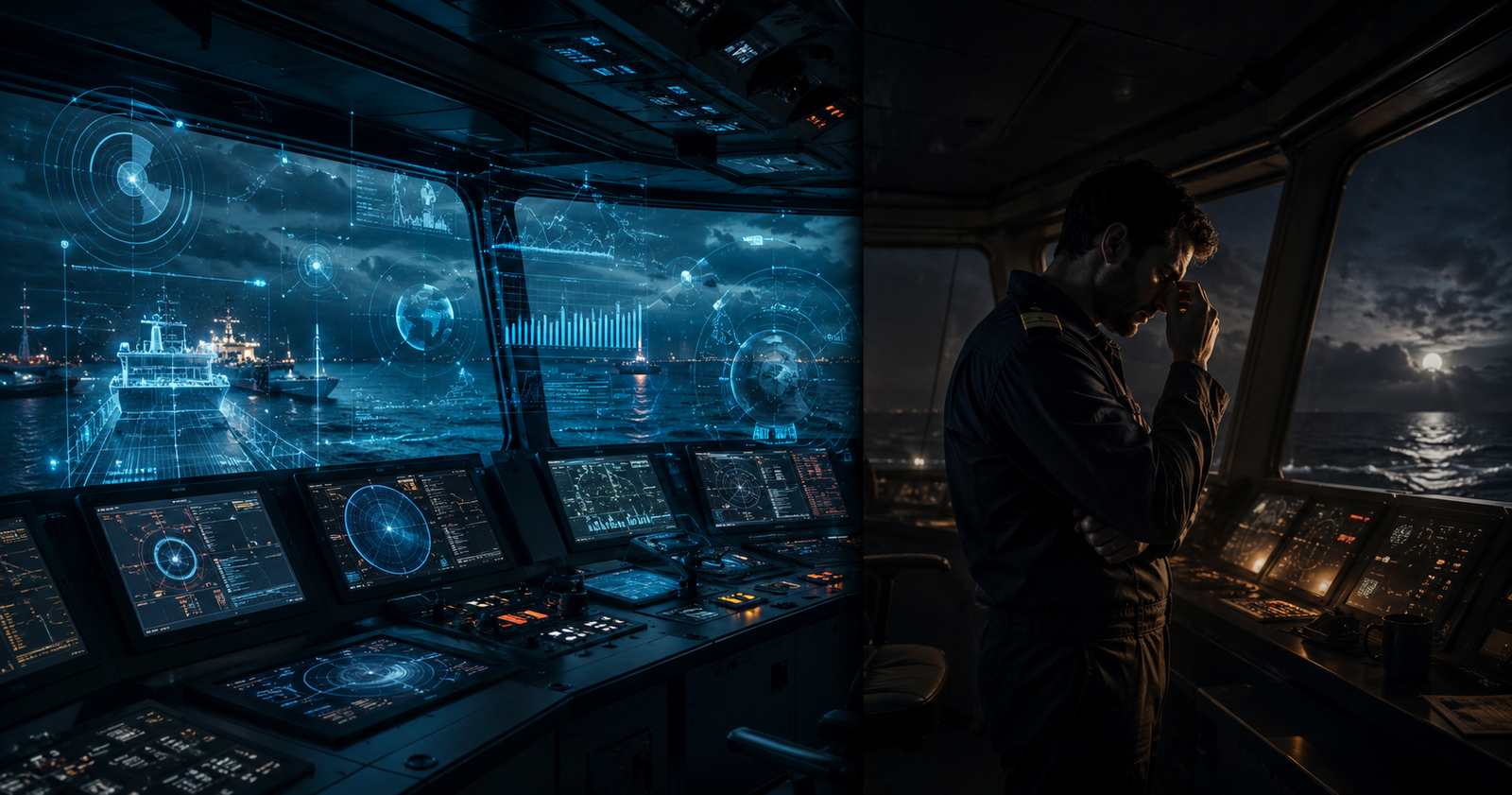
The modern ship is a technological marvel: Dashboards glow. Sensors blink. Algorithms whisper recommendations about fuel, weather, and efficiency.
From the shore office, the future seems firmly under control. From the bridge at 0300, it sometimes feels like the past never left.
Because behind every system, every regulation, every automated alert…there is still a human being trying to make sense of it all.
And humans, inconveniently, remain human.
Shipping Runs on Steel…..But It Survives on People.
The maritime industry moves 90% of the world’s goods. But the industry doesn’t actually run on steel hulls or satellite bandwidth…...It runs on people.
Which is exactly why the human factor in maritime safety conversation keeps getting ignored
Tired people. Stressed people. Resilient people who have learned to say “I’m fine” in seven languages — and mean something considerably more complicated.
The systems measure fuel consumption to three decimal places.
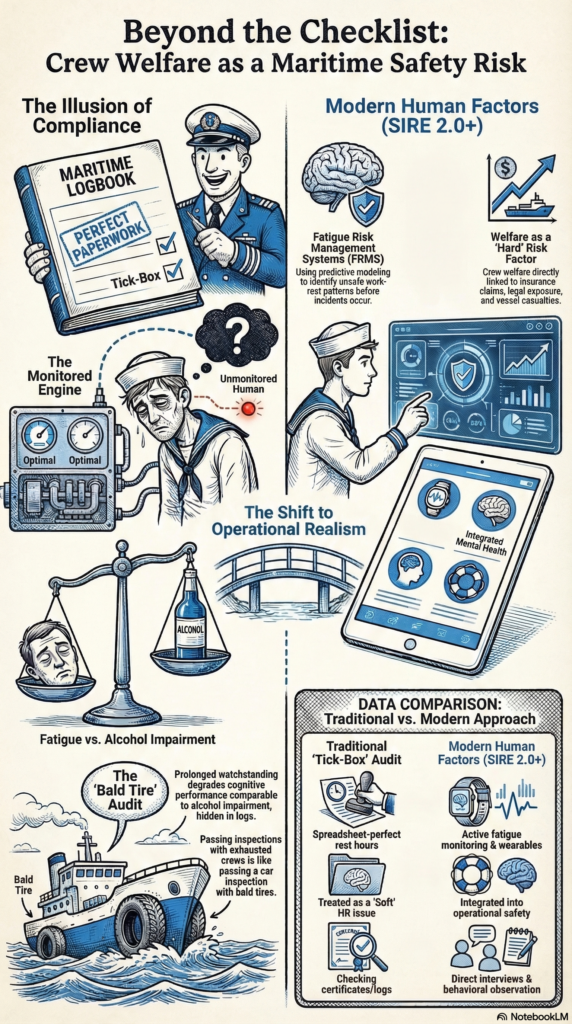
They don’t measure: Fatigue at the end of a twelve-hour watch. The quiet pressure of a schedule that cannot slip. Or the hesitation someone feels before reporting something that might make a KPI look uncomfortable.
Those things never make it to the dashboard.
The Questions Sensors Cannot Ask
The shipping industry is excellent at adding technology.
More sensors – More regulations – More dashboards explaining what already happened..
But until we start measuring what actually matters — fatigue, fear, trust, and the courage to speak up before a small problem becomes a large incident — Until the industry takes the human factor in maritime safety seriously, the headlines will keep returning.
The uncomfortable truth is that the industry doesn’t lack technology.
It lacks an honest conversation about the humans operating it.
Introducing: The Human Factor Series
Over the coming weeks/months, The Sarcastic Mariner(s) will explore the questions the industry usually leaves buried deep inside investigation reports.
Not with solutions. But with observations. Because sometimes the most useful thing you can do for a system is hold up a mirror.
The series will explore:
- ⚓ The paradox of smart ships and familiar headlines
- ⚓ The two exhausted worlds of ship and shore operations
- ⚓ The digital delusion — when more data creates worse decisions
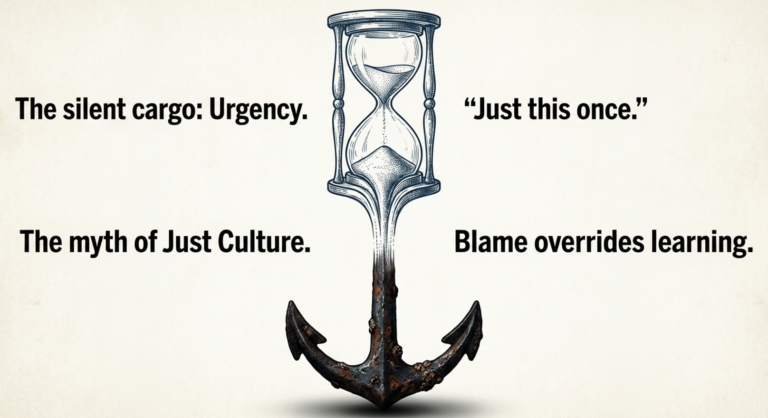
- ⚓ The cultural disease called urgency
- ⚓ The messy operational reality behind maritime casualties and investigations
- ⚓ And why the future of maritime safety might depend less on technology… and more on understanding people
Six acts. Seventeen articles. One inconvenient truth.
Follow along. And bring your scepticism. You’ll need it.
Because Safety Isn’t a Checklist
Safety has never lived inside procedures or dashboards. Safety lives inside conversations.
And conversations only happen when someone is willing to ask the uncomfortable questions. So that’s what we’ll do.
Not to provide answers. Just to start the discussion.
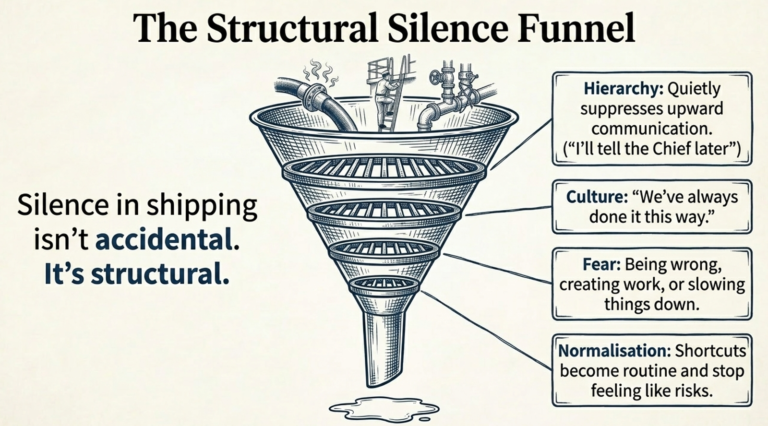
Because silence, in shipping, has a well-documented cost.
The Sarcastic Mariner(s)
Stirring the pot so the industry remembers how to think.
⚓ The Human Factor Series:
- #0 – Because What Gets Measured Is Not Always What Matters
- #1 – Smart Ships, Same Headlines
- #2 – The Quiet Cost of Competence: Crew Welfare and the Persona at Sea
- #3 – The Dashboard Never Sleeps: Why Shore Life Isn’t the Soft Option
- #4 – Connectivity Didn’t Kill Trust, It Just Revealed It
- #5 – Maritime Technology Overreliance
- #6 – Digital Delusion in Shipping
- #7 – Ancient Seamanship vs. Wearable Technology
- #8 – Normalization of Deviance in Shipping (The Cultural Disease)
- #9 – The Unicorn of Shipping
- #10 – Auditing Steel Instead of Souls
- #11 – Ballast Water 2.0
- #12 – Digital Pirates, Patchy WiFi, and Paperless Promises
- #13 – The 5-Minute Spill and the 3-Year Investigation
- #14 – The A.P.E.M. Framework
- #15 – Designed for Superhumans
- #16 – The 5-Minute Conversation That Saves Millions
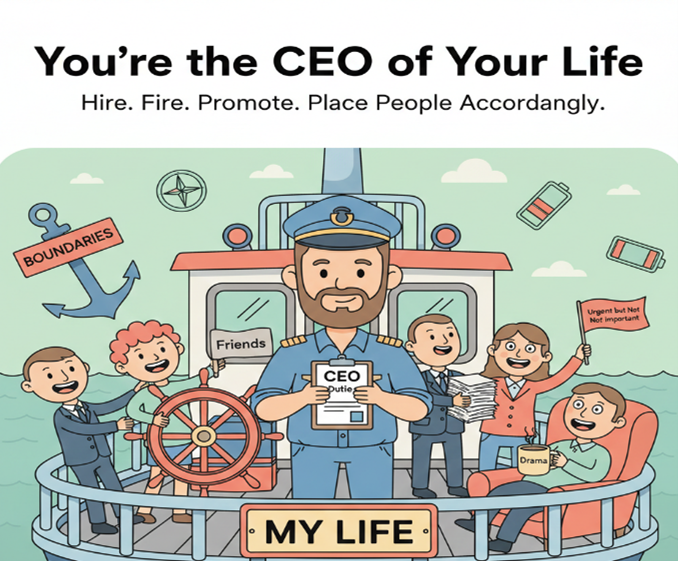
- #17 – Be the CEO of Your Life
- FINALE – The Other End of the Same Conversation