
Dr. Kumud R. Jha · Singapore · Doctorate in AI · US Patent Holder View LinkedIn Profile
Why AI Equity Is the Story Nobody’s Telling
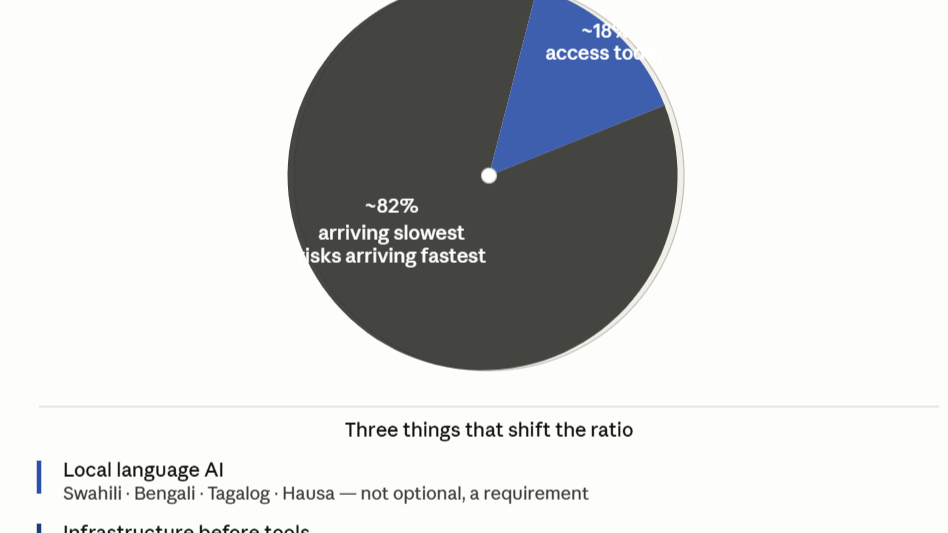
AI equity is the most important AI story of the next decade — and it is not the one being told in San Francisco, London, or Singapore. It is the one unfolding in Lagos, Dhaka, Nairobi, and Jakarta — in the two thirds of the world where the benefits of AI are arriving slowest and the risks are arriving fastest.
And most of the people shaping AI policy, AI products, and AI narratives have not spent enough time thinking about it.
Here is the structural problem.
AI systems are built predominantly by researchers and engineers in the United States, China, and Europe. They are trained on data that vastly overrepresents English, Mandarin, and Western European languages and cultural contexts. They are optimised for problems that matter to high-income markets. And they are deployed through infrastructure — reliable electricity, broadband internet, cloud computing access — that does not exist at scale across much of the world.
The result is a technology that is simultaneously the most powerful productivity tool in human history and structurally inaccessible to the majority of humans on earth. That is not a minor footnote. It is the central AI equity challenge of this era.
What the Doom Narrative Misses
The same technology that risks widening the gap also contains, within it, some of the most genuinely transformative tools for human development ever created — if deployed thoughtfully and with local agency at the centre.
AI translation is breaking down language barriers that have excluded billions of people from global knowledge systems for generations. A farmer in rural Indonesia, a doctor in rural Kenya, a teacher in rural Bihar — for the first time in history, they can access the world’s accumulated knowledge in their own language, at the moment they need it.
AI diagnostic tools are reaching communities where there is one doctor per fifty thousand people. Not replacing the doctor. Extending the reach of expertise that was previously geographically locked.
AI tutoring systems, deployed on low-bandwidth mobile networks, are providing personalised learning to children whose schools have forty students per teacher and no textbooks published after 2003.
These are not hypothetical futures. They are happening now, at small scale, in dozens of countries. The question is whether they scale — and on whose terms.
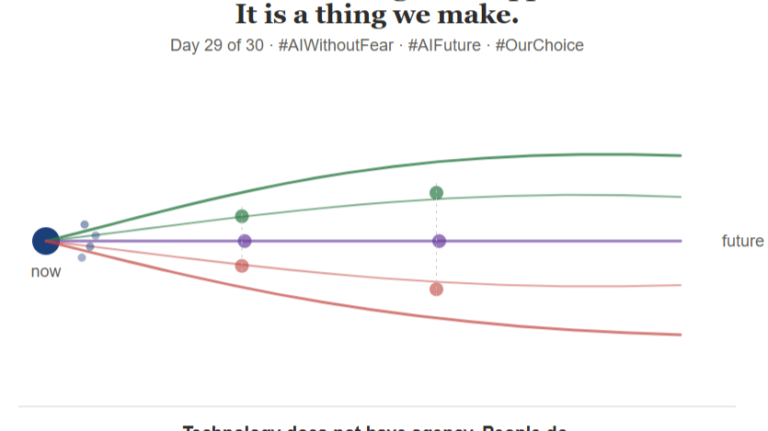
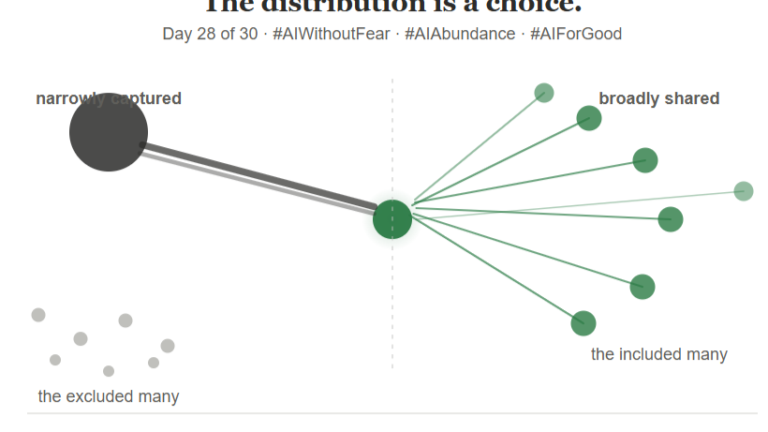
The risk is not that AI fails to reach the developing world. The risk is that it arrives on the same extractive terms that previous waves of technology did — capturing data, value, and economic surplus for the organisations that own the systems, while leaving local communities as consumers rather than participants.
The difference between those two outcomes is not technical. It is political, economic, and moral. It depends on who funds the deployment, who owns the data, who trains the local workforce, and whether the communities being served have genuine agency over the systems that are meant to serve them.
Three Things That Actually Matter for AI Equity
Local language AI is not optional. A system that does not work in Swahili, Bengali, Tagalog, or Hausa is not a global AI. It is a Western AI with global ambitions.
Infrastructure investment must precede deployment. Dropping AI tools into communities without electricity, connectivity, or digital literacy is not development. It is abandonment dressed as innovation.
Local AI ecosystems must be funded. Not just local users of foreign AI — local researchers, local developers, local governance frameworks. The communities most affected by AI should be among the people building it.
As we covered in Day 22, deliberate design beats fast deployment at the organisational level. The same principle applies at civilisational scale: AI equity will not happen by accident. It has to be designed for, deliberately, by the people building these systems.
The technology is extraordinary. The question — as always — is who it is for.