
We talk a lot about maritime safety culture. Then the auditor arrives with a clipboard.
Ship name. IMO number. Flag. Last audit findings. Date of last dry dock. Name of the third officer who probably isn’t there anymore.
Then we proceed to audit the vessel.
As if steel, charts, and ECDIS settings wake up every morning, make coffee, and decide how risky to be today.
Here’s the thing nobody puts in the audit report:
Ships don’t make choices. People do.
But that’s inconvenient. Because people are messy. People have moods, bad days, leadership styles that vary from “let’s discuss this openly” to “my way or the gangway.”
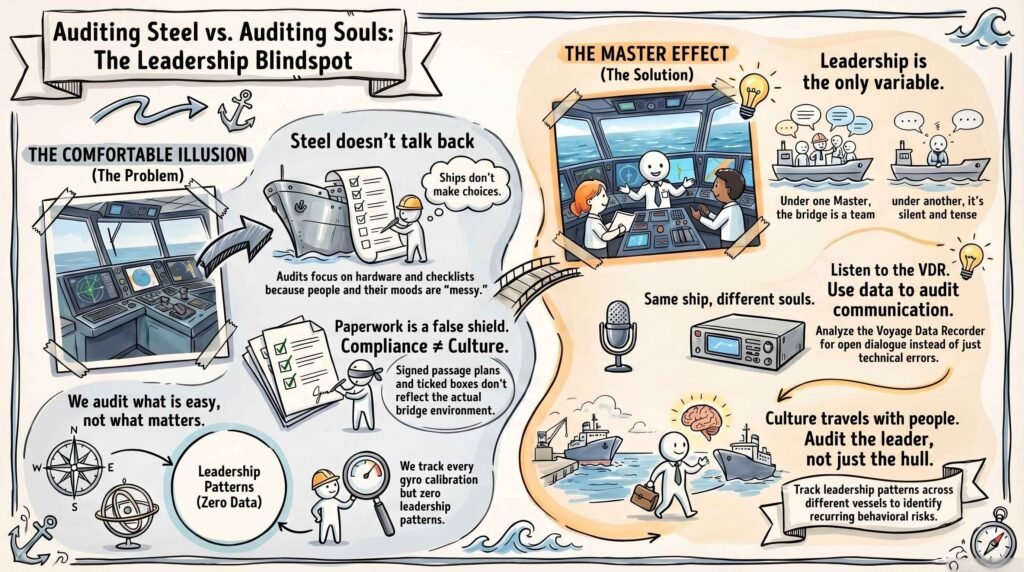
So instead, we audit the steel. The steel doesn’t talk back.
The Comfortable Illusion of Auditing “Ships” –
By auditing vessels by name and number, we create a comforting fiction:
- That risk lives in hardware, not humans
- That safety is embedded in checklists, not conversations
- That compliance equals culture (it doesn’t)
So we inspect:
- Passage plans (are they signed in the right places?)
- ECDIS alarms (are they set correctly? never mind if anyone actually looks at them)
- Bridge resource management forms (ticked, filed, forgotten)
- VDR excerpts (but only the five minutes around an incident, never the six months before)
And if the paperwork looks good? We move on. Stamp. Done. Next vessel.
Meanwhile, the real variable—leadership—sits in the captain’s chair, largely unexamined.
Not because we don’t know it matters. Because we don’t know how to audit it.
And shipping hates questions it can’t answer with a checkbox.
The Master Effect (Everyone Knows It Exists)
Every seafarer reading this is already nodding.
You’ve lived it.
The same vessel. Same crew. Same route. Same weather, even.
But under one Master? Calm. Disciplined. People speak up. The bridge feels like a team.
Under another Master? Rushed. Tense. Silent. The only sound is the captain’s voice and the quiet hum of people hoping not to be noticed.
Nothing changed structurally.
The bridge layout didn’t move. The charts didn’t rewrite themselves. The ECDIS didn’t suddenly become harder to use.
Only the person in command changed.
And with that:
- Challenge culture changed
- Reporting behaviour changed
- Risk appetite shifted
- The number of “minor deviations” that never got reported? Skyrocketed
Yet our audit systems still pretend this is incidental.
“The vessel has a good safety record.”
No. The Master had a good safety record. And now they’ve left. And the next person might be different.
But the audit certificate stays on the wall.
That’s maritime safety culture in action — not a policy, but a person.
VDRs Don’t Lie. We Just Don’t Listen Properly.
Here’s the irony.
We already have the most honest tool on board. The Voyage Data Recorder.
It’s not just for what happened in the three minutes before contact.
It’s a recording of how people behaved over weeks and months.
- Was bridge communication open or hierarchical?
- Were decisions discussed or dictated?
- Were warnings acknowledged or ignored with a grunt?
- Did junior officers speak up—or stay quiet because they learned not to?
The VDR knows.
But instead of analysing leadership patterns, we:
- Extract a few minutes around an incident
- Focus on technical non‑compliance (was the alarm set correctly? did someone press the wrong button?)
- File it under “lessons learned” in a report that three people will skim
Lessons learned by whom, exactly?
The steel didn’t learn anything. The checklist didn’t change. The Master who created the environment? Probably still sailing. Probably still unexamined.
Maritime Safety Culture Is Not Ship Specific. It’s Person Specific.
We say: “This vessel has a weak safety culture.”
What we usually mean: “This leadership environment discourages people from speaking up.”
But MAritime safety culture doesn’t stay welded to the hull. It travels with people.
Especially with Masters.
A captain who listens and invites challenge? That ship feels different. Not because of new paint. Because people aren’t afraid.
A captain who treats every question as criticism? That ship feels cold. Quiet. Safe on paper, dangerous in reality.
So here’s the uncomfortable question:
Why do we track ship histories meticulously—every deficiency, every minor finding, every overdue calibration—but barely track leadership patterns at all?
We know exactly when the last gyro was serviced.
We have no idea whether the Master actually listens to the second officer.
That’s not a data gap. That’s a priority gap.
This is the same dynamic explored in The Human Factor #9 – The Unicorn of Shipping — a captain’s leadership style shapes whether people report honestly at all.
A Thought Worth Exploring (Because Nobody Else Will)
What if navigational audits grew up a little?
What if they:
- Followed Masters across vessels – anonymised if needed, but tracked. Patterns emerge. Repeated behaviours. Good and bad.
- Looked for recurring behavioural themes – not just incident counts. How does this person handle disagreement? How do junior officers behave around them?
- Used VDR data to assess communication quality – not just compliance. Open dialogue? Or one‑way commands?
- Treated leadership as a risk factor – or a safety barrier. Because it is. Possibly the biggest one.
Not to punish. To understand.
Because no amount of ECDIS tuning will fix a bridge where people are afraid to speak.
No checklist revision will compensate for a captain who’s never wrong.
And no audit stamp will predict the next incident if we’re looking at the steel instead of the soul.
The Real Audit Question
If:
- People run ships (not steel, not software)
- Maritime Safety Culture is shaped by leadership (not posters, not lighthouses on motivational materials)
- Safety lives in behaviour, not binders (sorry, your filing system isn’t saving anyone)
Then maybe the real question isn’t:
“Is this ship compliant?”
It’s:
“What kind of bridge culture does this leadership create?”
Steel can be certified. Checklists can be signed. Alarms can be tested.
But leadership?
That deserves a much closer look.
And until we’re willing to look there, we’re not auditing safety.
We’re just auditing paperwork with a clipboard and a nice font.
Because until we’re willing to look at leadership, we’re not really auditing maritime safety culture at all.
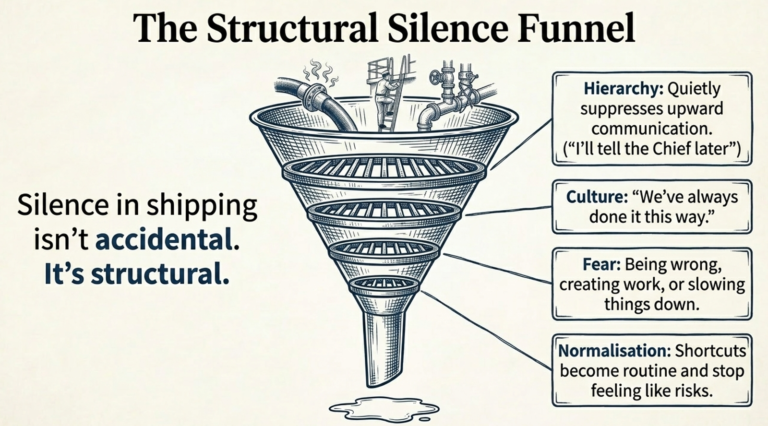
This is also where normalization of deviance usually begins — not with bad people, but with leadership that discourages questions
Fiction from the same sea: The Measurable Horizon, Book 5: Accountability in the Age of Visibility →
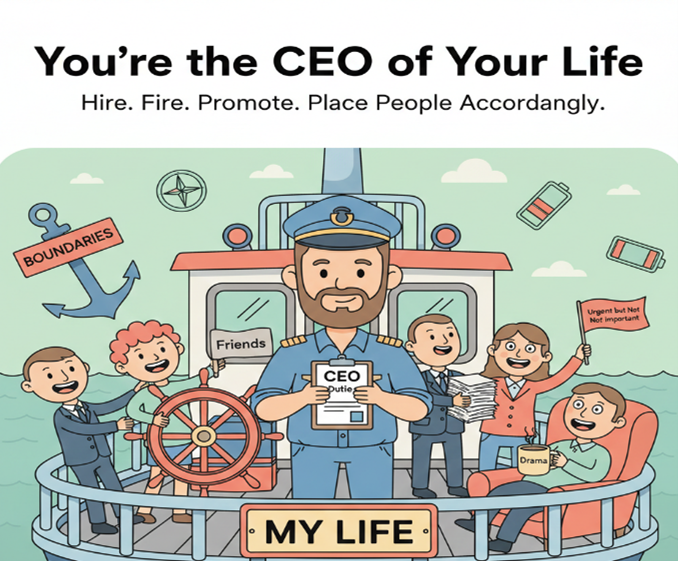
Related reading: Be the CEO of Your Life: Leading Yourself Before Leading the Ship